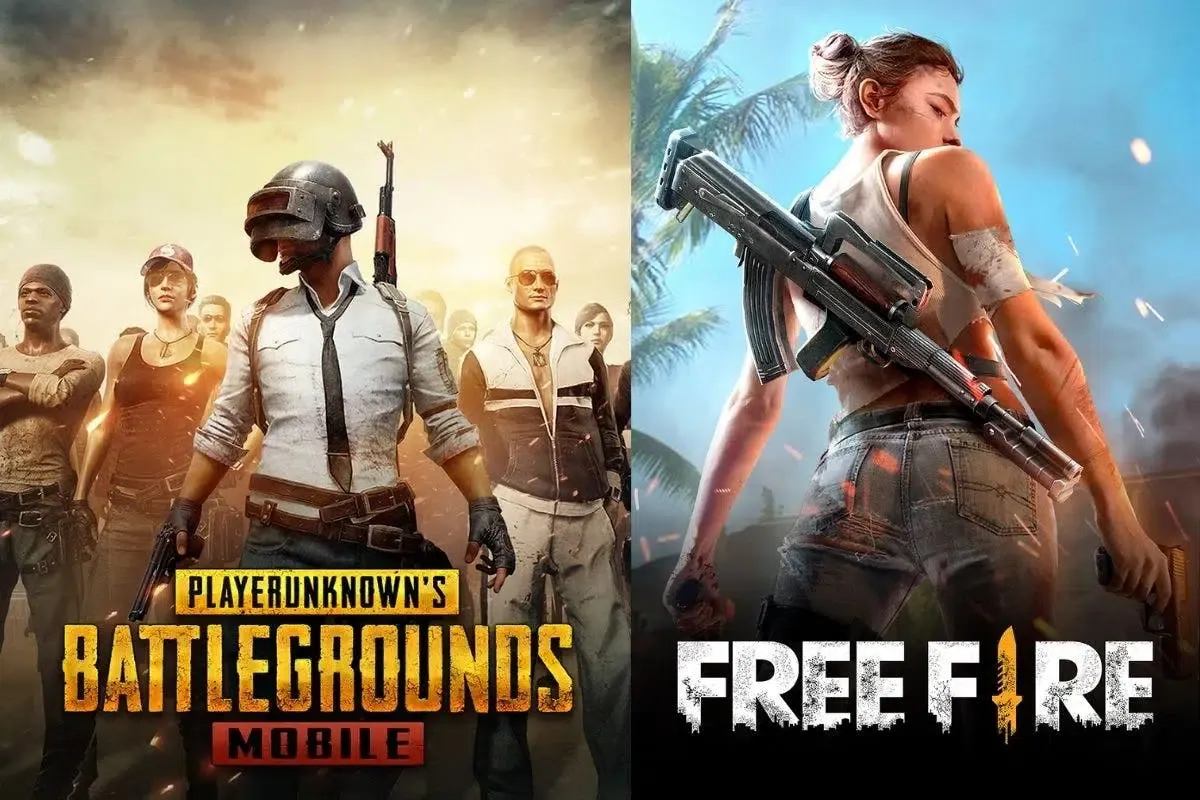
Introduction: The Battle Royale Showdown, Free Fire vs PUBG Mobile
Free Fire and PUBG Mobile dominate the mobile battle royale scene, but they cater to different playstyles and audiences. Free Fire delivers fast-paced, 10-minute matches with streamlined mechanics, while PUBG Mobile emphasizes tactical depth, realism, and longer sessions. In 2026, the debate over which game is superior hinges on performance, monetization, and community trends. Whether you prioritize quick rounds or immersive combat, understanding their core differences will help you choose the right fit for your gaming habits.
This comparison covers everything from nombres para freefire trends to esports prize pools, so you can decide which game aligns with your goals. We’ll break down graphics, gameplay, weapons, maps, and more to give you a complete picture of what each title offers.
Brief history of both games
Garena Free Fire launched in 2017 as a mobile-first battle royale designed for low-end devices, quickly gaining traction in Southeast Asia and Latin America. Its 10-minute matches and accessible mechanics made it a hit among casual players. PUBG Mobile, released in 2018 as a mobile adaptation of PlayerUnknown’s Battlegrounds, prioritized realism, larger maps, and longer sessions, appealing to competitive gamers. Both games evolved rapidly, with Free Fire introducing new maps like Bermuda and Kalahari, while PUBG Mobile expanded with Erangel 2.0, Sanhok, and Livik.
By 2026, both titles had cemented their places in the mobile gaming ecosystem, with Free Fire reaching over 150 million daily active users and PUBG Mobile surpassing 1 billion downloads. Their histories reflect broader trends in mobile gaming: accessibility vs. depth, and short-form entertainment vs. immersive experiences.
Rise in popularity and global reach
Free Fire’s growth exploded in regions like India, Brazil, and Indonesia, where its lightweight design and free-to-play model resonated with players on mid-range and low-end devices. PUBG Mobile, meanwhile, dominated markets like the U.S. Europe, and South Korea, where high-end mobile gaming and esports culture thrived. Free Fire’s partnership with influencers and streamers in Latin America and Southeast Asia fueled its rise, while PUBG Mobile’s realistic graphics and tactical gameplay attracted competitive gamers worldwide.
The two games also reflect cultural preferences: Free Fire’s vibrant, cartoonish art style appeals to younger audiences, while PUBG Mobile’s gritty, military-inspired aesthetic aligns with traditional shooter fans. In 2026, both games maintain massive player bases, but their communities skew toward different demographics and playstyles.
Why the comparison matters in 2026
With battle royale games evolving rapidly, Free Fire and PUBG Mobile represent two distinct approaches to mobile gaming. Free Fire’s emphasis on speed and simplicity makes it ideal for quick sessions, while PUBG Mobile’s depth and realism cater to players who crave immersive, tactical experiences. In 2026, the choice between the two often comes down to device compatibility, internet speed, and personal playstyle preferences.
Monetization models also diverge: Free Fire’s battle pass and skins are more affordable, while PUBG Mobile’s premium cosmetics and seasonal events target higher-spending players. For esports enthusiasts, PUBG Mobile’s larger prize pools and established tournaments offer more prestige, but Free Fire’s growing competitive scene is catching up fast. Understanding these differences helps players align their gaming habits with the right title for their goals.
Visual fidelity and artistic style
PUBG Mobile sets the benchmark for visual fidelity on mobile, with realistic textures, dynamic lighting, and detailed character models that rival console experiences. Its environments, from the snowy landscapes of Vikendi to the dense jungles of Sanhok, are meticulously crafted to enhance immersion. Free Fire, by contrast, adopts a stylized, cartoonish aesthetic with vibrant colors and exaggerated character designs. This approach prioritizes performance and accessibility, making it easier to run on lower-end devices.
The artistic choices reflect each game’s target audience: PUBG Mobile appeals to players who value realism and tactical depth, while Free Fire’s bright, playful visuals attract casual gamers and younger audiences. In 2026, both games continue to refine their styles, with PUBG Mobile introducing ray-traced effects and Free Fire experimenting with more detailed environments.
Lighting and environmental effects
PUBG Mobile’s lighting system is among the most advanced in mobile gaming, featuring dynamic day-night cycles, volumetric fog, and realistic shadows that change with weather conditions. These effects enhance immersion but demand more from a device’s GPU. Free Fire simplifies lighting with softer, stylized effects that maintain visibility and performance, even on low-end phones. Environmental details like destructible terrain and interactive objects further differentiate the two games.
For example, PUBG Mobile’s destructible environments allow players to carve trenches or collapse buildings, adding a layer of strategy to combat. Free Fire’s destructible elements are more limited but still impactful, ensuring that matches remain fast-paced and accessible. In 2026, both games continue to refine their environmental effects, with PUBG Mobile introducing more interactive elements and Free Fire optimizing its lighting for better performance.
FPS and smoothness comparison
PUBG Mobile supports higher frame rates, including 90 FPS and 120 FPS modes on compatible devices, delivering ultra-smooth gameplay during intense firefights. Free Fire caps at 60 FPS but optimizes performance aggressively, ensuring stable frame rates even on mid-range and low-end devices. The difference is most noticeable in fast-paced scenarios like hot drops or endgame fights, where PUBG Mobile’s higher FPS provides a competitive edge.
For players with high-end devices, PUBG Mobile’s frame rate options make it the smoother experience, especially in crowded lobbies. Free Fire’s optimization, however, makes it the more reliable choice for players on budget phones or in regions with inconsistent internet speeds. In 2026, both games continue to improve stability, but PUBG Mobile’s technical edge remains a key selling point for competitive gamers.
Movement and mobility differences
Free Fire’s movement is designed for speed, with sprinting, crouching, and sliding mechanics that let players reposition quickly in combat. The game’s smaller maps and shorter matches reinforce this fast-paced playstyle. PUBG Mobile, by contrast, emphasizes tactical movement, with prone positioning, vaulting over obstacles, and vehicle traversal adding layers of strategy. The difference is stark: Free Fire rewards agility and quick reactions, while PUBG Mobile rewards patience and spatial awareness.
For example, Free Fire’s sliding and crouch-spam mechanics allow players to dodge bullets and reposition in seconds, making it ideal for aggressive playstyles. PUBG Mobile’s movement system, with its realistic physics and destructible environments, encourages more deliberate, tactical engagements. In 2026, both games continue to refine their movement mechanics, but their core philosophies remain unchanged.
Looting and inventory management
Free Fire streamlines looting with a compact inventory system and quick-access buttons, allowing players to grab loot and gear up in seconds. The game’s smaller maps and faster TTK (time-to-kill) mean looting is often a race against the circle. PUBG Mobile, with its larger maps and slower TTK, demands more strategic looting, with players prioritizing attachments, armor, and healing items over raw firepower. The inventory system in PUBG Mobile is more detailed, with separate slots for weapons, attachments, and consumables.
For example, Free Fire’s looting system encourages players to grab the first usable weapon they find and focus on mobility. PUBG Mobile’s looting system rewards patience, with players often waiting for hot drops or third-party sites to secure top-tier loot. In 2026, both games continue to refine their looting mechanics, but their core approaches remain distinct: speed vs. strategy.
Revive mechanics and squad play
Free Fire’s revive system is straightforward: downed teammates can be revived by teammates within a short time window, and the revived player retains their gear. This encourages aggressive squad play and quick rotations. PUBG Mobile’s revive system is more complex, with downed players requiring a teammate to carry them to cover before reviving, which can be risky in combat. The game also features a unique “squad wipe” mechanic, where reviving a teammate resets the squad’s death timer.
For example, Free Fire’s revive system makes it easier for squads to stay together and push aggressively, even after early deaths. PUBG Mobile’s system rewards coordination and map awareness, as players must balance reviving teammates with avoiding enemy fire. In 2026, both games continue to tweak their revive mechanics, but Free Fire’s simplicity gives it an edge for casual and competitive squads alike.
Map variety and uniqueness
PUBG Mobile boasts a diverse roster of maps, from the sprawling Erangel and Miramar to the tropical Sanhok and snow-covered Vikendi. Each map offers unique terrain, loot distribution, and strategic opportunities, catering to different playstyles. Free Fire’s maps, like Bermuda, Purgatory, and Kalahari, are smaller and designed for faster, more intense matches. The game’s map rotation is also more frequent, keeping gameplay fresh and unpredictable.
For example, PUBG Mobile’s Erangel is a fan favorite for its sprawling landscapes and iconic landmarks, while Free Fire’s Bermuda is praised for its verticality and tight corridors. In 2026, both games continue to introduce new maps, but PUBG Mobile’s variety gives it an edge for players who crave diversity and long-term replayability.
Weapon variety and rarity systems
PUBG Mobile offers a vast arsenal of weapons, from assault rifles like the M416 and AKM to snipers like the AWM and Kar98k, with attachments that significantly alter performance. The game’s rarity system is tied to weapon stats, with higher-tier weapons offering better stats but requiring more skill to use effectively. Free Fire’s weapon roster is smaller but more accessible, with guns like the M1014 shotgun and AWM sniper rifle available in every match. The game’s rarity system is tied to skins, with higher-tier skins offering cosmetic upgrades rather than stat boosts.
For example, PUBG Mobile’s weapon variety allows for deep customization and meta strategies, while Free Fire’s simpler system makes it easier for new players to jump into matches without worrying about gear gaps. In 2026, both games continue to expand their weapon rosters, but PUBG Mobile’s depth remains unmatched for competitive players.
Attachment effectiveness and customization
PUBG Mobile’s attachment system is one of its deepest features, with scopes, grips, stocks, and muzzle devices that can transform a weapon’s performance. For example, a red dot sight improves close-range accuracy, while a suppressor reduces noise and recoil. Free Fire’s attachment system is simpler, with fewer options and less impact on gameplay. The game focuses more on weapon skins and emotes as customization tools, rather than stat-altering attachments.
For competitive players, PUBG Mobile’s attachment system offers unparalleled depth, allowing for tailored loadouts that fit specific playstyles. Free Fire’s system, while less complex, makes it easier for casual players to experiment with different setups without overwhelming complexity. In 2026, both games continue to refine their attachment systems, but PUBG Mobile’s depth remains a key differentiator for serious gamers.
Weapon balance and meta impact
PUBG Mobile’s weapon balance evolves constantly, with patches adjusting recoil, damage, and TTK to keep the meta fresh and competitive. The game’s meta is heavily influenced by esports, with tournaments dictating which weapons and attachments rise to the top. Free Fire’s meta is more stable, with fewer balance changes and a focus on accessibility. The game’s weapon balance prioritizes fun and engagement over competitive precision, making it easier for new players to jump in and enjoy matches.
For example, PUBG Mobile’s meta often shifts around the M416 or AWM, with players adapting their strategies to counter top-tier weapons. Free Fire’s meta is more fluid, with weapons like the MP5 or UMP gaining popularity based on community trends rather than competitive dominance. In 2026, both games continue to tweak their weapon balance, but Free Fire’s stability gives it an edge for casual players.
Time-to-Kill (TTK) in Free Fire vs PUBG Mobile
Free Fire’s TTK is significantly faster, with most fights ending in under 5 seconds thanks to its simplified damage model and higher fire rate weapons. The game’s smaller maps and faster movement also contribute to shorter engagements. PUBG Mobile’s TTK is slower, with fights often lasting 10 seconds or more, especially in endgame scenarios. The game’s realistic damage model and weapon recoil systems reward precision and positioning, making each shot count.
For example, a headshot in Free Fire can down an enemy in one shot, while PUBG Mobile’s TTK allows for multiple shots to down a player, depending on armor and weapon choice. This difference shapes the entire gameplay experience: Free Fire rewards aggression and quick reactions, while PUBG Mobile rewards patience and tactical play. In 2026, both games maintain their TTK systems, but Free Fire’s speed remains a defining feature for its audience.
Weapon damage and headshot mechanics
Free Fire’s weapon damage model is simplified, with headshots dealing massive damage that can down an enemy in one shot, regardless of armor. The game’s damage system is designed for fast-paced, high-intensity combat, where quick reactions and accuracy are key. PUBG Mobile’s damage model is more realistic, with headshots requiring precise aim and dealing damage based on weapon type and attachments. Armor plays a bigger role in PUBG Mobile, allowing players to survive multiple hits before going down.
For example, a headshot with an AKM in Free Fire will down an enemy in one shot, while the same headshot in PUBG Mobile might require multiple shots depending on the enemy’s armor. This difference shapes the entire combat experience: Free Fire rewards aggressive playstyles and quick reactions, while PUBG Mobile rewards precision and tactical positioning. In 2026, both games maintain their damage models, but Free Fire’s simplicity gives it an edge for casual players.
Impact on gameplay pace and strategy
Free Fire’s faster TTK and smaller maps create a high-octane, action-packed experience where every second counts. The game rewards aggressive playstyles, quick rotations, and constant movement, making it ideal for players who crave adrenaline-fueled matches. PUBG Mobile’s slower TTK and larger maps encourage more deliberate, tactical gameplay, with players prioritizing positioning, looting, and long-range engagements. The difference in pace shapes the entire strategy of each game.
For example, Free Fire matches often devolve into chaotic firefights where players must adapt quickly to survive. PUBG Mobile matches, by contrast, are more methodical, with players taking their time to set up ambushes or control key chokepoints. In 2026, both games continue to refine their gameplay pace, but Free Fire’s speed remains a defining feature for its audience.
Monetization: Free Fire’s Simplicity vs PUBG’s Complexity
Free Fire’s monetization is straightforward, with a single currency (diamonds) used for battle passes, skins, and emotes. The battle pass is affordable and offers clear progression, making it easy for players to earn rewards without spending money. PUBG Mobile’s monetization is more complex, with multiple currencies (UC, Battle Points, etc.), premium battle passes, and a vast marketplace for skins, weapons, and bundles. The game’s premium cosmetics can be expensive, targeting higher-spending players.
For example, Free Fire’s battle pass costs around $10 for a full season, while PUBG Mobile’s premium battle pass can exceed $30. Free Fire’s skins are also more affordable, with most costing under $5, while PUBG Mobile’s premium skins can reach $20 or more. In 2026, both games continue to refine their monetization models, but Free Fire’s simplicity gives it an edge for budget-conscious players.
Battle pass structure and rewards
Free Fire’s battle pass is divided into two tiers: free and paid. The free tier offers basic rewards like skins and emotes, while the paid tier (around $10 per season) unlocks exclusive cosmetics and currency. The battle pass is designed to be accessible, with clear progression and frequent rewards. PUBG Mobile’s battle pass is more complex, with multiple tiers and currencies (UC, Battle Points) required for premium rewards. The paid battle pass (around $30 per season) offers exclusive skins, weapons, and bundles, but the progression can feel slow for some players.
For example, Free Fire’s battle pass rewards players with diamonds and skins every few levels, making it easy to stay engaged. PUBG Mobile’s battle pass, by contrast, often requires players to grind for UC or Battle Points to unlock premium rewards. In 2026, both games continue to refine their battle pass systems, but Free Fire’s simplicity gives it an edge for casual players.
Cosmetic and functional item availability
Free Fire’s cosmetic shop focuses on skins, emotes, and character customization, with most items costing under $5. The game also offers functional items like parachutes, emotes, and voice packs, which can enhance gameplay without breaking the bank. PUBG Mobile’s cosmetic shop is more expansive, with a vast marketplace for skins, weapons, and bundles. Premium cosmetics can be expensive, with some skins exceeding $20, but the game also offers functional items like parachutes and emotes.
For example, Free Fire’s skins are often tied to popular characters or themes, making them highly customizable. PUBG Mobile’s skins, by contrast, are tied to weapons or outfits, offering more variety but at a higher cost. In 2026, both games continue to expand their cosmetic offerings, but Free Fire’s affordability gives it an edge for budget-conscious players.